












Why choose a birthstone?
A birthstone ties your ring to the month you, or the person you love, came into the world, so the design starts from something already personal. People have worn birthstone rings for centuries, and many cultures still read symbolism into the stones: a September sapphire for loyalty, a July ruby for passion, a March aquamarine for calm waters, a January garnet as a token of constancy. Choosing the stone of a birthday turns the ring into a marker of a love story and a reminder of the commitment behind it.
Every month carries at least one stone, and between them they span a wide range of colours. March's aquamarine brings a fresh, pale blue. May's emerald is a rich green, and August's peridot a lighter, lime-green. Warmer reds come from January's garnet and July's ruby, while February's amethyst adds purple and a November topaz or citrine brings golden yellow. June has a soft white pearl or colour-shifting alexandrite, and December's tanzanite holds a violet-blue found in few other gems. April stays classic with the diamond. The range runs from light, fresh shades to deeper tones, so the stone can lean bright or dramatic to suit the wearer.
Choosing the right birthstone engagement ring
The main stone usually sets the direction for everything else, the metal included. Warm-toned stones such as a ruby or garnet suit yellow gold or rose gold, which echo their reds. Cooler stones like a sapphire or aquamarine often look crispest in white gold or platinum, where the metal stays out of the way and lets the colour read true. Green stones such as emerald and peridot go either way, warm or white, depending on the effect you're after.
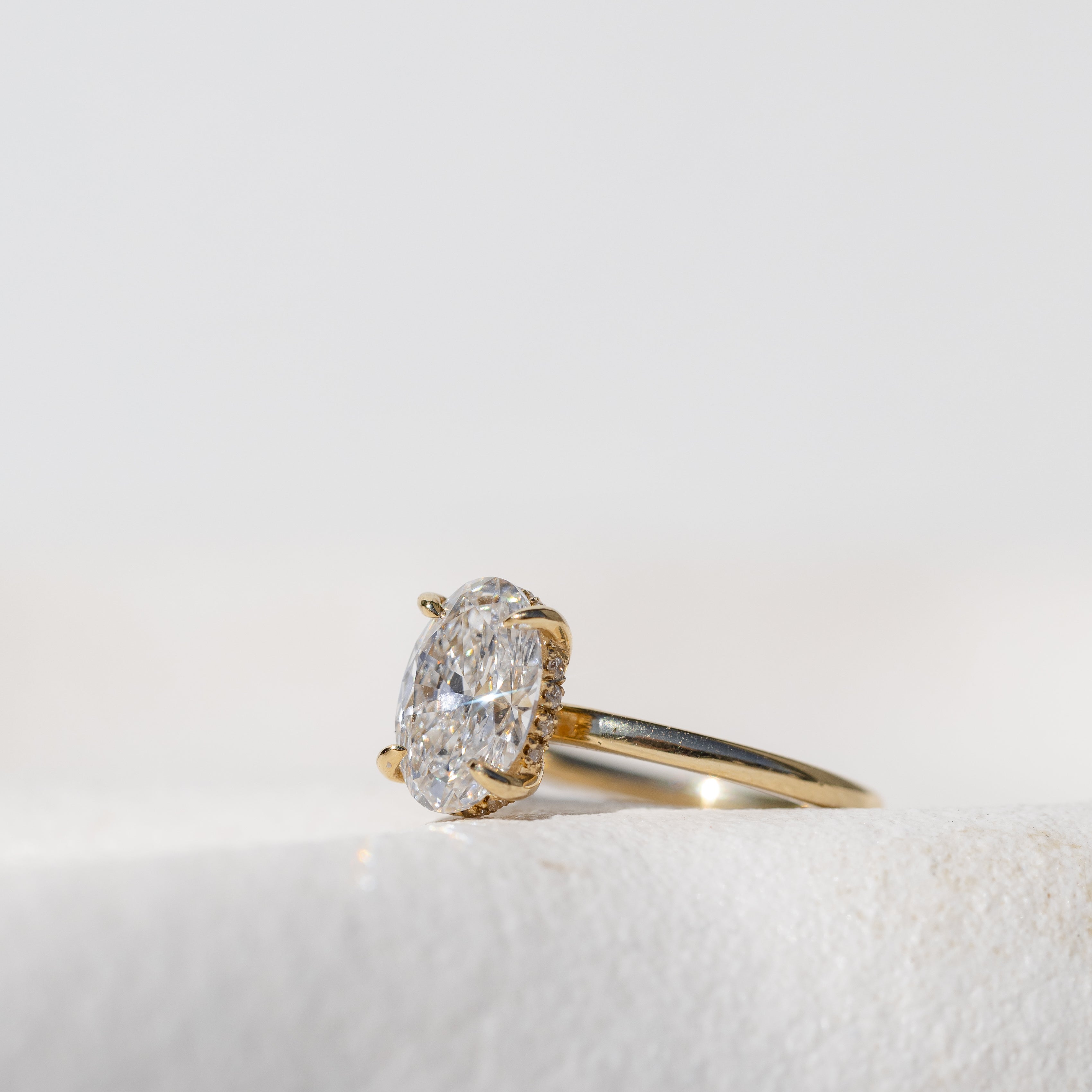
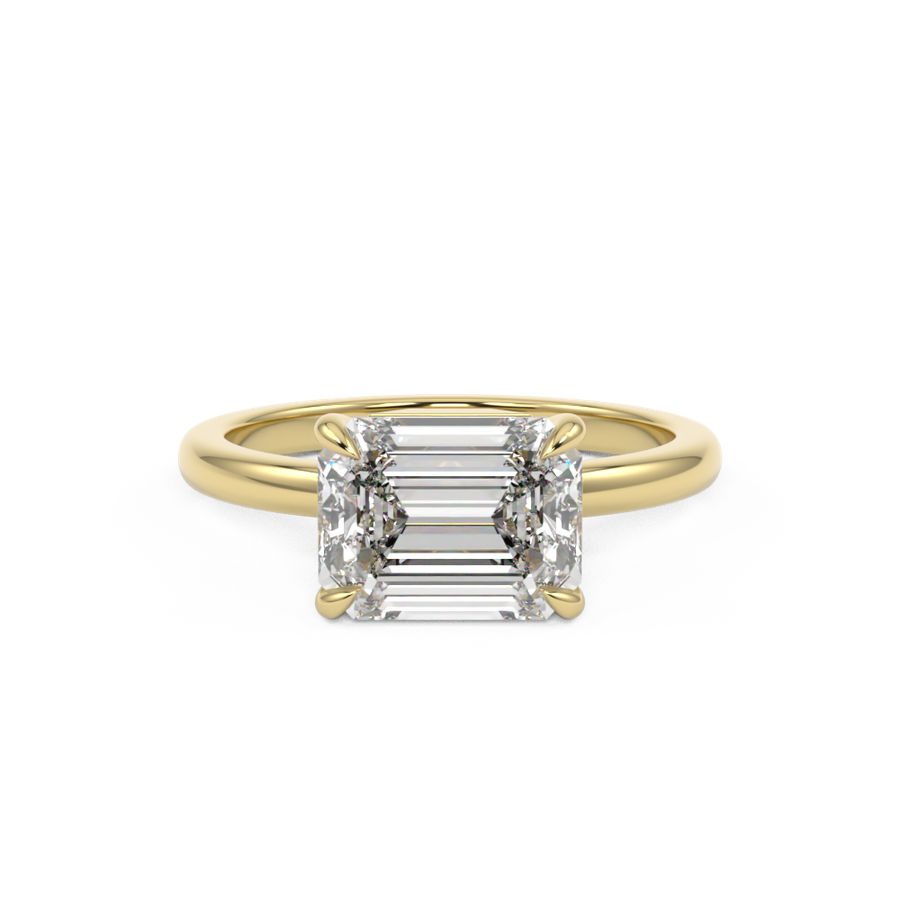
Setting matters just as much. A solitaire keeps all the attention on a single birthstone and lets its colour speak for itself. Surround that stone with a halo of small diamonds and you lift its brilliance and make it look larger, which flatters smaller or paler stones. A three-stone design is another route: frame a central birthstone with two accent diamonds, or set a couple's two birthstones either side of a central diamond for something more personal.
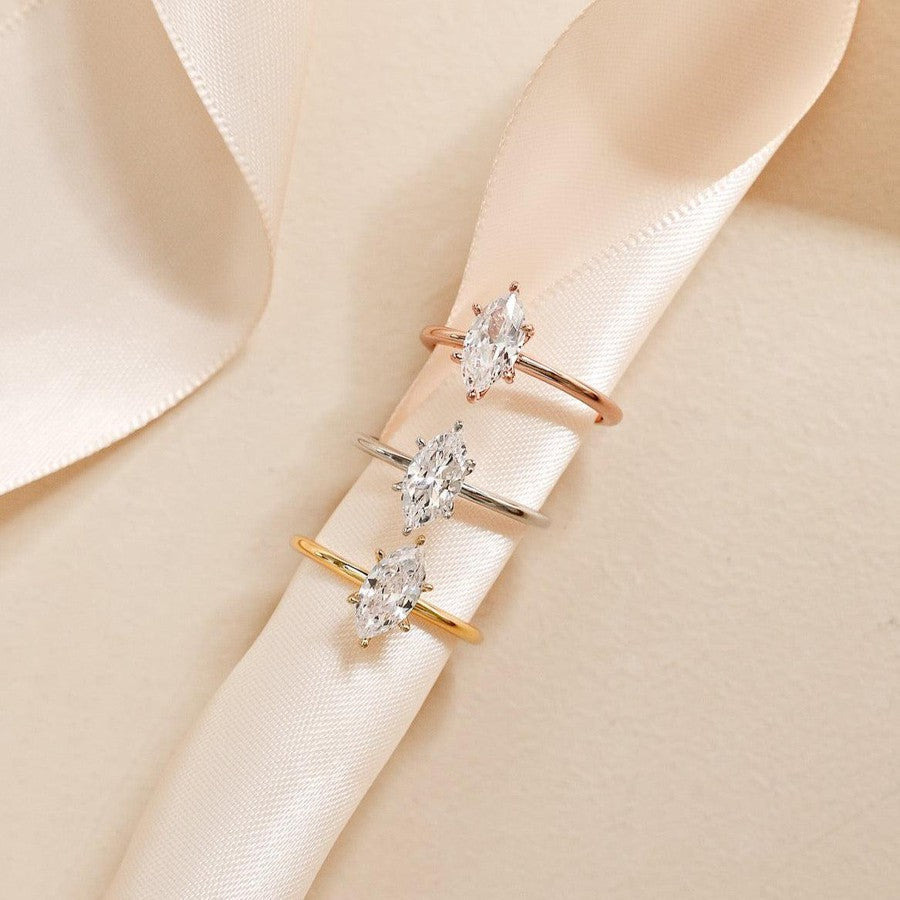
If you're weighing up options, our team can show you the same stone set in yellow gold, white gold, rose gold and platinum side by side. Seeing the combinations in person, rather than on a screen, makes it far easier to picture the finished ring and choose the one that matches your style.
Birthstone engagement rings for everyday wear
An engagement ring takes daily knocks, so a stone's hardness is worth understanding before you commit. Gemmologists rate this on the Mohs scale, which runs from one to ten. Diamond sits at the top at ten, with sapphire and ruby just below at nine, which is why all three handle constant wear so well. Topaz reaches eight, and emerald and aquamarine sit close behind at around seven and a half, durable enough for daily wear, though emeralds can be brittle and are happiest in a protective setting. Garnet, amethyst, peridot and citrine sit near seven, still practical with a little care.
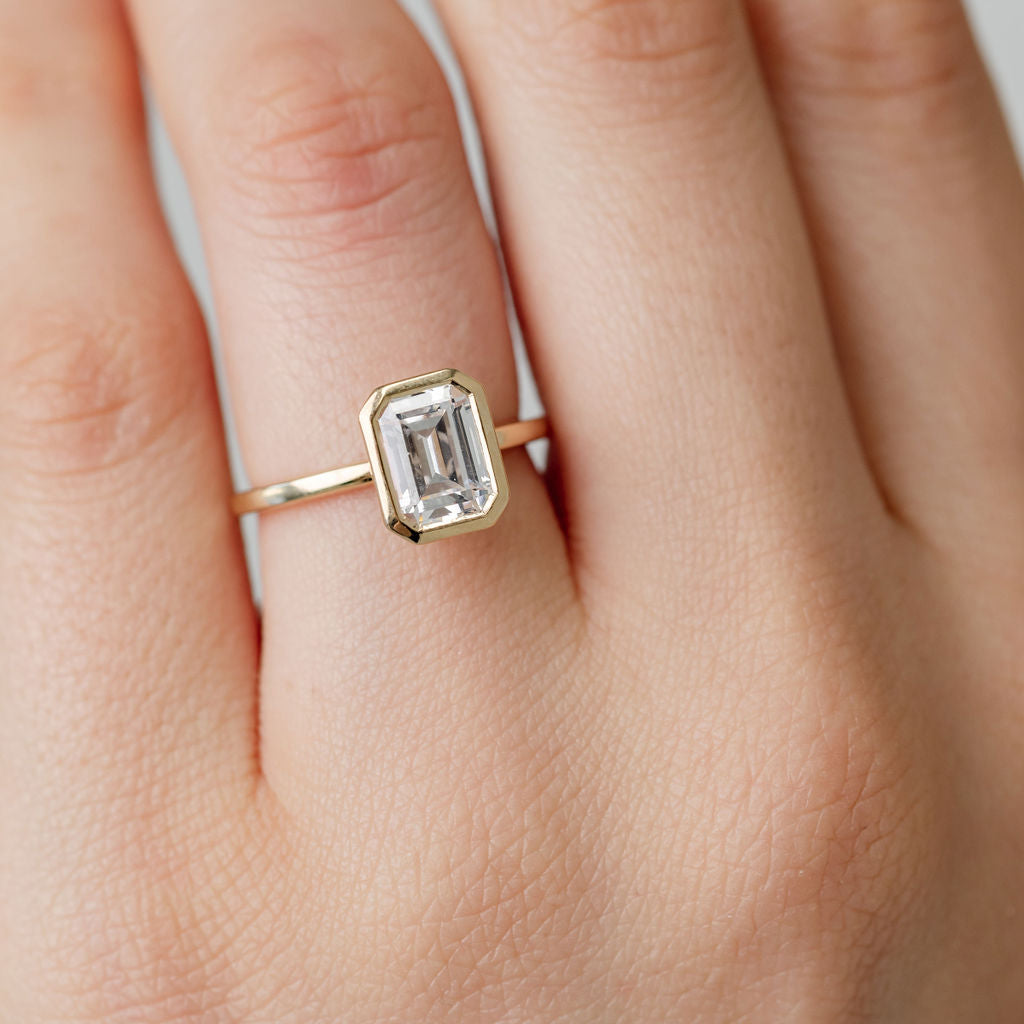
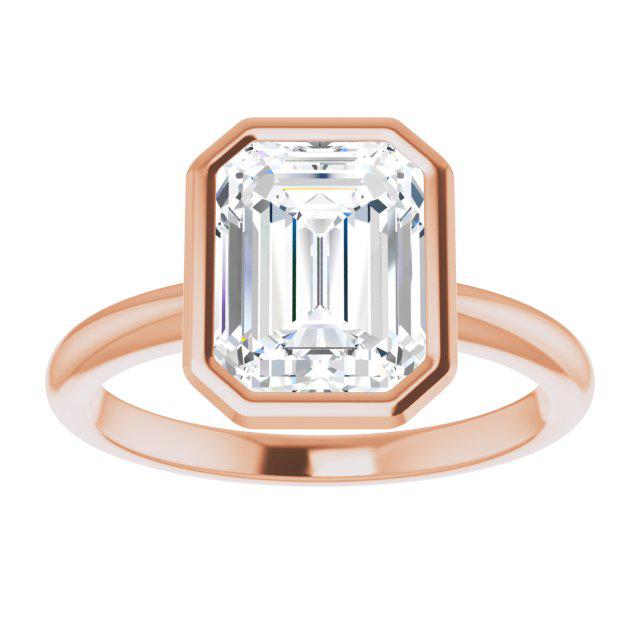
Softer stones need more thought. Pearl is delicate, at roughly two and a half to four on the scale, and tanzanite sits on the softer side too, so both suit rings worn occasionally more than every day. If your heart is set on one of these, a bezel or lower, protected setting adds security and shields the stone from knocks. A well-made setting that holds the stone firmly keeps it safe over years of wear, and our jewellers build every mount with that in mind.
Custom and made to order
Every birthstone engagement ring at Harry & Co can be made entirely your own. Choose a setting from the collection or work with us to create something unique from scratch, with each gemstone hand-selected by our GIA-qualified team. We ship across Australia, so an order placed in Melbourne or Sydney arrives as easily as one collected here in Adelaide. You're also welcome to book a consultation at our Hyde Park studio, or a video call if a visit isn't practical.
Frequently Asked Questions
What is my birthstone?
Your birthstone is the gemstone traditionally linked to your birth month. January is garnet, February amethyst, March aquamarine, April diamond, May emerald, June pearl or alexandrite, July ruby, August peridot, September sapphire, October opal, November topaz or citrine, and December tanzanite or turquoise. Some months carry more than one recognised stone, which gives you a little room to choose the colour you like best.
Are birthstones tough enough for an engagement ring?
Many are. Sapphire and ruby are second only to diamond in hardness and cope with daily wear as well as any stone, which makes them popular for a birthstone engagement ring. Topaz and garnet hold up well too, as do beryls such as emerald and aquamarine, with sensible care. Softer stones like pearl and tanzanite are better kept for rings worn now and then, or set into a protected mount that shields them from knocks.
Can I use a birthstone instead of a diamond as the main stone?
Yes. A coloured birthstone can take the place of the diamond as the main stone, so you're not limited to a traditional diamond engagement ring. Many couples prefer a sapphire or emerald centre for the colour and personal significance it brings, while keeping the brilliance of small diamonds in the band or halo. The choice comes down to the look and the meaning you want the ring to hold.
Can I combine two birthstones in one ring?
You can. A three-stone setting is the usual way to do it, with two birthstones set either side of a central stone, or paired together at the centre. Couples often use their own two birthstones, or a parent might add a child's stone alongside their own. It's a simple bit of personalisation that gives the ring a story only you can read.
Can I see the birthstones in person before I buy?
Visit our Hyde Park studio to see the birthstones under proper light and compare colours side by side before you decide. Holding a stone in person shows you detail a screen can't, from the depth of its hue to the way it catches the light. If you're outside Adelaide, we can arrange a video consultation, and you can add any personalisation at checkout once you've settled on your design.

Our diamonds are hand selected by our experts for you

Crafted in Australia in 4 - 6 weeks

Lifetime warranty & complimentary service
